Quick answer
Acne-prone skin does best with a light, oil-free gel or lotion: Cetaphil Gentle Clear Mattifying, COSRX Oil-Free Lotion, Deconstruct Oil-Free or iUNIK Centella. If salicylic acid or benzoyl peroxide leaves you dry, CeraVe PM or Minimalist B5. Skipping moisturizer does not clear acne; it adds irritation.
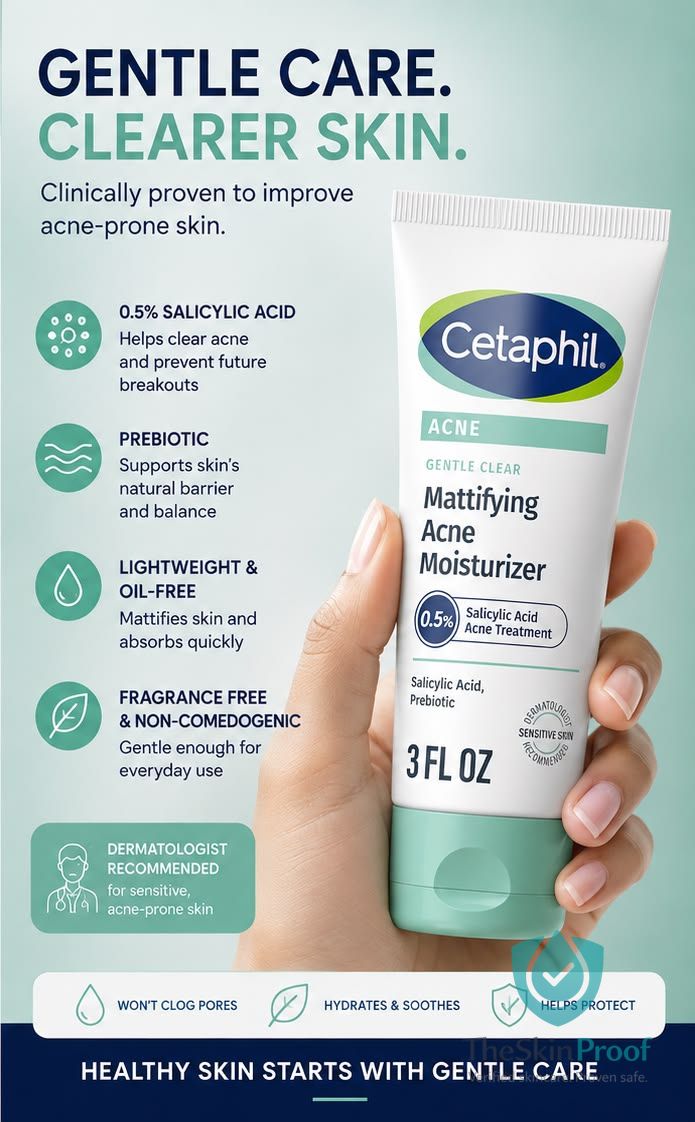 ✓ Verified • 2× money-backCetaphil Gentle Clear Mattifying Acne MoisturizerFrom ৳2,369Buy →
The short answer
The best moisturizer for acne-prone skin is a light, oil-free gel or lotion that does not weigh pores down and handles the dryness that acne treatments cause.
- Oily and acne-prone: Cetaphil Gentle Clear Mattifying Acne Moisturizer, Deconstruct Oil-Free Moisturizer or, on a budget, Dot & Key Cica Calming Oil Free Moisturizer.
- Red, irritated breakouts: iUNIK Centella Calming Gel Cream or Dr. Althea 345 Relief Cream.
- Dryness from salicylic acid or benzoyl peroxide: CeraVe PM Facial Moisturizing Lotion or Minimalist 10% Vitamin B5 Face Moisturizer.
- Very oily skin in summer: COSRX Oil-Free Ultra Moisturising Lotion or CeraVe Oil Control Moisturizing Gel Cream.
Why moisturize if you have acne
Many people think: my skin is already oily, why add cream? But oil and water are not the same thing. Oily skin can still be dehydrated underneath. On top of that, the cleansers and treatments used for acne, such as salicylic acid, benzoyl peroxide or adapalene, dry the skin, cause peeling and sting. Without a moisturizer, many people give up on the treatment because of that irritation, and the acne comes back.
So on acne-prone skin, moisturizer is part of the treatment, not a luxury. The texture and formula just have to be right. To understand the treatment ingredients, read the adapalene and benzoyl peroxide guide.
The "non-comedogenic" label: how far to trust it
Non-comedogenic means the manufacturer says the product is formulated not to clog pores. It is a useful signal, not a guarantee. A few reasons:
- There is no single, universal test standard behind the word.
- Different people react differently to the same ingredient.
- Amount matters too. Even a light cream can cause trouble in a thick layer.
So read the label, but the real test is your skin. Use a new moisturizer for 2–3 weeks and watch whether new bumps are increasing. If a new product brings out some breakouts early on, read purging vs breakout to tell which it is.
What to look for, what to avoid
Look for: gel, gel-cream or thin lotion textures; glycerin and hyaluronic acid; niacinamide (known to help with oil and redness); centella or panthenol (to calm irritation); ceramides (for treatment dryness).
Avoid: very heavy butter- or oil-based creams, strong fragrance, and coconut oil from the kitchen on your face. If you suspect fungal acne (small, uniform, itchy bumps), some oils and fatty ingredients can make it worse.
All 7 picks, compared
Prices are from our live catalogue as of 27 September 2026; the product page shows the current price.
| Moisturizer | Best for | Size | Price |
|---|---|---|---|
| Cetaphil Gentle Clear Mattifying Acne Moisturizer | Oily-combination, acne-prone, matte | 89 ml | ৳2,369 |
| COSRX Oil-Free Ultra Moisturising Lotion | Oily, sensitive, light lotion | 100 ml | ৳1,999 |
| Deconstruct Oil-Free Moisturizer | Oily, visible pores, budget | 50 ml | ৳999 |
| Dot & Key Cica Calming Oil Free Moisturizer | Oily-combination, red breakouts, trial size | 15 ml | ৳449 |
| iUNIK Centella Calming Gel Cream | Red, irritated breakouts | 60 ml | ৳1,699 |
| CeraVe PM Facial Moisturizing Lotion | Treatment dryness, night | 60 ml | ৳2,399 |
| Minimalist 10% Vitamin B5 Face Moisturizer | All skin types, alongside treatment | 50 g | ৳1,049 |
How to pair it with acne treatment
Salicylic acid (BHA) cleanser or serum: for example COSRX Salicylic Acid Daily Gentle Cleanser. Pat dry after washing and apply a light moisturizer straight away. If your skin feels tight, use the BHA 3–4 days a week instead of daily. Details in the salicylic acid guide.
Benzoyl peroxide wash: for example PanOxyl Acne Creamy Wash. This one is more drying. If you use it in the morning, follow with CeraVe PM or Minimalist B5, and use the same moisturizer after washing at night. It can bleach fabric and towels, so use white ones.
The "sandwich" method for peeling: a thin layer of moisturizer, then the treatment, then moisturizer again. This reduces irritation.
Amount: a pea- to chickpea-sized amount for the whole face. Thin on the T-zone, a little more on dry areas.
A simple daily routine
Acne-prone skin does not need a ten-step routine. These steps are enough if you keep them consistent:
Morning:
- A gentle cleanser, or a salicylic cleanser on BHA days.
- A thin layer of light, oil-free moisturizer.
- SPF 50 sunscreen. Sun makes acne marks darker, so do not skip it.
Night:
- If you wore sunscreen, micellar water, then your cleanser.
- Your acne treatment, if you have one, spread thinly over the whole area, not dotted on single spots.
- Moisturizer. If dryness is a problem, this is where CeraVe PM or Minimalist B5 helps.
Add new products one at a time, two weeks apart. Start a new cleanser, serum and cream together and you will not know which one caused a breakout. Teenagers and anyone under 18 should talk to a parent and a doctor before starting strong treatments.
How to tell if a moisturizer is causing breakouts
After starting a new moisturizer, watch for a few things:
- Where are new bumps appearing? If small, skin-coloured, hard bumps (closed comedones) increase exactly where you apply the cream, especially the forehead and cheeks, it may be too heavy for you.
- How soon? Such bumps usually show up within 2–4 weeks. Changing only your moisturizer should not cause purging; purging is more typical when you start exfoliating acids or retinoids.
- Is there itching? Uniform small bumps that itch may be fungal acne, which needs different care.
If in doubt, stop the cream for two weeks, move to a lighter oil-free one and note the changes. Taking a photo once a week in the same light makes comparison easier.
Extra care in Bangladesh
- Heat and sweat: in summer and monsoon, choose gel textures. Moisturizer applied over a sweaty face can sit in pores along with the sweat, so blot your face first.
- Bikes and helmets: friction and sweat on the chin and jaw make breakouts worse. Keep helmet pads clean, and wash and moisturize lightly when you get home.
- AC offices: when AC dries the skin, it can respond with more oil. Do not skip moisturizer at work.
- Pillowcases and phones: change pillowcases at least twice a week and wipe your phone screen.
Common mistakes
- Skipping moisturizer and washing four times a day. Irritation and redness go up.
- Changing creams every week. You need at least 4–6 weeks to judge any change in acne.
- Applying toothpaste, lemon or raw garlic. These can increase irritation and marks.
- Picking pimples. It leaves marks and pits.
- Counterfeit products. Every product on TheSkinProof is batch-checked against the importer’s invoice, with 2× money back if proven counterfeit.
When to see a doctor
See a dermatologist for painful, deep, pus-filled or cyst-like acne; acne that leaves marks or pits; a sudden flare of acne with irregular periods or excess facial hair; or no improvement after 8–12 weeks of consistent care. Do not start medicated creams or oral medicines on your own. For the full acne guide, read how to get rid of acne.
Frequently asked questions
Should I use moisturizer if I have acne?
Yes. Oily skin can still be dehydrated, and acne treatments such as salicylic acid and benzoyl peroxide dry the skin. Without a moisturizer, irritation often makes people stop their treatment, so the acne returns. Choose a light, oil-free gel or lotion and apply a thin layer.
What is the best moisturizer for acne-prone skin in Bangladesh?
A light, oil-free formula works best. Cetaphil Gentle Clear Mattifying, Deconstruct Oil-Free and Dot & Key Cica Oil Free suit oily acne-prone skin, iUNIK Centella Calming Gel Cream suits red breakouts, and CeraVe PM or Minimalist Vitamin B5 help with dryness from acne treatments.
Does a non-comedogenic label guarantee no breakouts?
No. Non-comedogenic is a helpful signal from the manufacturer, but there is no single universal test standard, and individual skin reacts differently. Use a new moisturizer for two to three weeks in a thin layer and watch whether new bumps increase before deciding it suits you.