Quick answer
In winter, moisturise within 3 minutes of your bath while skin is still damp: CeraVe Moisturising Lotion or Vaseline Cocoa Glow on the body, Cetaphil Moisturizing Lotion on the face, and Bioderma Atoderm Intensive Baume on heels at night.
 ✓ Verified • 2× money-backCeraVe Moisturising Lotion for Dry to Very Dry SkinFrom ৳1,649Buy →
The short answer
In winter, pat yourself dry after a bath and put moisturiser on while your skin is still slightly damp, within 3 minutes. For the body use CeraVe Moisturising Lotion for Dry to Very Dry Skin, or Vaseline Intensive Care Cocoa Glow Body Lotion on a budget, and a thick cream such as Cetaphil Moisturizing Cream for Dry Skin if your skin is very dry. Use a separate, lighter moisturiser on the face, such as Cetaphil Moisturizing Lotion for Normal to Dry Sensitive Skin. At night give heels and elbows something thicker, such as Bioderma Atoderm Intensive Baume. Keep the water lukewarm and the bath to 5 to 10 minutes.
Why the 3 minutes after a bath matter so much
While you bathe, the top layer of your skin soaks up water. Once you towel off, that water evaporates very quickly, and the dry northern wind of a Bangladeshi winter speeds it up even more. That is why so many people say their skin feels tighter after a bath than before. You are not imagining it.
A moisturiser holds that water in the skin. On damp skin a lotion spreads easily, you need less of it, and skin stays soft for longer. Put the same lotion on once skin has dried and turned rough, and it does about half the job. That is the whole idea behind the "3-minute rule", also called the damp-skin rule.
Step by step: the winter bath and what comes after
- Keep the water lukewarm. It should feel comfortable on your inner wrist, never scalding. Very hot water strips the skin's natural oils. Read more in hot-water baths in winter.
- Keep the bath short. 5 to 10 minutes is enough. You do not need bucket after bucket.
- Mild soap, only where you need it. Underarms, groin and feet, where you sweat and smell. Arms, legs and back do not need soap every day. Mild bars such as Cetaphil Gentle Cleansing Bar or Dove Pink Rosa Deep Miosturizing Cream Beauty Bar work. Skip harsh alkaline soaps and antiseptic liquids for daily use.
- Wash your face separately. Do not use body soap on the face. Use a gentle cleanser such as Cetaphil Gentle Skin Cleanser Normal To Dry Skin.
- Pat dry with a towel, do not rub. Leave skin slightly damp, not dripping.
- Face moisturiser within 3 minutes. Two pea-sized drops cover the face and neck.
- Then lotion or cream on the body. Arms, legs and back together take roughly a tablespoon. The fronts of the shins and the backs of the hands dry out the most, so give them a little extra.
- Separate care for elbows, knees and heels. Use a thick cream or balm here. Applying at night and wearing socks works even better.
- Do not forget your lips. Apply a balm such as Vaseline Lip Therapy Cocoa Butter while they are still damp from the bath.
- Heading out in the morning? Once your moisturiser has settled, put sunscreen on your face, for example Beauty of Joseon Relief Sun: Rice + Niacinamide SPF50+ PA++++.
Face and body: why they need different products
Facial skin is thinner, has more oil glands and is more likely to break out. Body skin is thicker, and the legs in particular have few oil glands, so they crack first in winter. A thick body lotion on the face gives many people small bumps. A light face gel on the legs, on the other hand, leaves them tight again within half an hour.
- Dry face: Cetaphil Moisturizing Lotion for Normal to Dry Sensitive Skin, or Simple Kind To Skin Replenishing Rich Moisturiser if you are drier still.
- Oily or acne-prone face: a light gel such as Neutrogena Hydro Boost Water Gel Aqua Gel. Do not skip moisturiser just because it is winter.
- Body: CeraVe Moisturising Lotion for Dry to Very Dry Skin for every day. On a budget, Vaseline Intensive Care Cocoa Glow Body Lotion. For very rough legs, Cetaphil Moisturizing Cream for Dry Skin or Bioderma Atoderm Crème Ultra-Nourishing Cream.
Lotion, cream or oil: which one and when
| Product | Texture | Best for |
|---|---|---|
| Lotion | Thin, absorbs quickly | After a morning bath, normal to slightly dry skin, rushed days |
| Cream | Thick, lasts longer | Very dry legs and hands, a night bath, the foggiest months |
| Balm | Thickest | Heels, elbows, cracked fingertips, at night |
| Oil | Adds no water, only seals | A few drops over lotion on very dry legs |
There is a common misunderstanding about oil. Oil does not give skin water; it only forms a layer on top. So if you rub plain oil on dry skin, it feels rough again after a while. The better way: lotion first on damp skin, then 2 or 3 drops of oil on the driest areas, such as Ribana Organic Coconut Oil. Do not put coconut oil on the face or on an acne-prone back, because it can clog pores and make breakouts worse.
About home remedies: a little glycerin mixed with rose water is fine, because glycerin draws water into the skin. But you must put a moisturiser over it, or in dry air it can leave skin feeling even tighter. Do not rub lemon, baking soda or toothpaste on your face or body. They disturb the skin's natural acidity and increase stinging and cracking.
Heels and elbows
Heel skin is thick, has almost no oil glands and carries your weight all day, so it is the first place to crack in winter. To be honest, we do not have a dedicated foot cream or urea cream on our shelf right now. What works well instead:
- While bathing, gently rub damp heels with a soft towel or pumice stone 2 to 3 times a week. Never until it bleeds.
- At night, apply a thick layer of Bioderma Atoderm Intensive Baume or Cetaphil Moisturizing Cream for Dry Skin and put on cotton socks.
- By morning your heels will be much softer. Done regularly for 2 weeks, cracks usually settle a lot.
See how to fix cracked heels for more.
Morning bath or night bath
- Morning bath: a thin lotion so it does not stick to clothes. Moisturiser then sunscreen on the face. If it is foggy and windy outside, lip balm is a must.
- Night bath: the best time for thick creams, because skin has the whole night to repair. Night cream on the face, cream on the body, balm on the heels, then socks. Read the full night routine in the winter night routine.
- Do not go out with wet hair, and do not sleep with it wet. The scalp dries out and itches more.
A short note on bathing babies
Babies lose water from their skin faster than adults. In winter they do not need a full bath every day. A 5-minute lukewarm bath every other day is enough, with a wipe-down using a damp cloth in between. Use baby products for babies: Cetaphil Baby Wash & Shampoo With Natural Calendula, then Aveeno Baby Daily Moisture Lotion or Sebamed Baby Cream Extra Soft while the skin is still damp. Do not use adult lotions or scented products on a baby. For babies under 6 months, check the label says fragrance-free, and use no essential oils.
Many families massage babies with mustard oil. Research suggests mustard oil can irritate some babies' skin and weaken its protective barrier, so many doctors now suggest a plain, fragrance-free baby moisturiser instead. There is no need to panic; just know the alternative. Full guide: winter care for newborns and babies.
Common mistakes
- Long baths in scalding water, then red, itchy skin afterwards.
- Rubbing hard with the towel.
- Putting lotion on 20 to 30 minutes after the bath, once skin is completely dry.
- Using body lotion or coconut oil on the face.
- Scrubbing every day with a scrub or loofah. In winter, once a week is enough.
- Thinking plain oil alone counts as moisturising.
- Scented adult lotion on a baby.
The Bangladesh reality
On a winter morning the tap water is ice cold, so water gets heated on a geyser or stove and mixed in a bucket. That is where the problem starts: the water often ends up too hot. Keep a simple rule. If you can hold your hand in the bucket for 10 seconds, it is fine. Many homes have water high in iron or hardness, which means more soap and drier skin, so skipping moisturiser is not an option. In a mess or hostel with little time, keep the lotion in the bathroom and put it on before you step out. If you come home dusty, a night bath is good, but on a very cold night washing hands, feet and face and then moisturising also works.
When to see a doctor
- Itching or red patches do not ease after 2 weeks of regular moisturising.
- Skin cracks and bleeds, oozes pus, swells and hurts, or you get a fever.
- Heel cracks become deep and painful to walk on, especially if you have diabetes. Do not wait.
- Eczema-like rough, itchy patches keep coming back.
- A rash spreads on your baby, blisters appear, or the baby cries a lot or has a fever.
Why buy authentic
Fake lotions and creams may contain the wrong ingredients, extra fragrance or old stock, all of which make dry skin sting more. TheSkinProof is an invoice-verified skincare marketplace: every product's supply chain is checked against invoices. If a product is proven counterfeit you get 2× your money back, with claims made within 7 days of delivery. Delivery across Bangladesh, cash on delivery available.
Read next
- The 24-hour winter skincare routine
- Which body lotion is best for winter
- Body wash for dry winter skin
- Every winter question in one place: Winter FAQ Centre: body care
What to use, how to use it, where to buy it
Step by step, by time of day. Every product is invoice-verified.
- 1
Right after a bath
A short bath with a mild bar
Lukewarm water, 5 to 10 minutes. Soap only on underarms, groin and feet. Avoid harsh alkaline soaps.
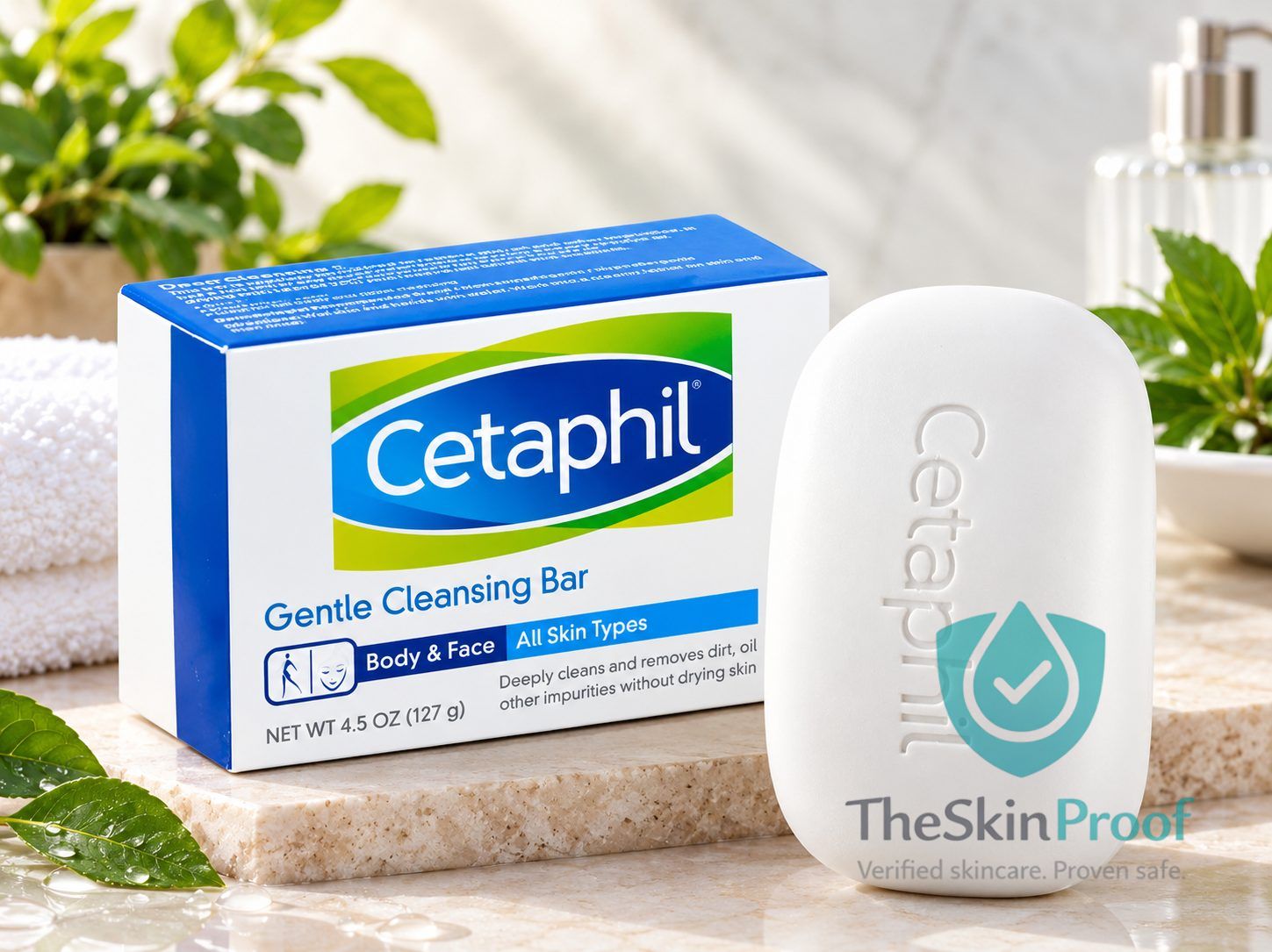 Cetaphil Gentle Cleansing Bar৳1,190Buy
- 2
Right after a bath
Wash the face separately
A small amount of gentle cleanser, massage softly for 30 seconds, rinse with lukewarm water and pat dry.
 Cetaphil Gentle Skin Cleanser Normal To Dry Skin৳999Buy
- 3
Right after a bath
Face moisturiser within 3 minutes
Two pea-sized drops over face and neck while skin is still damp. In the morning, sunscreen goes on top.
 Cetaphil Moisturizing Lotion for Normal to Dry Sensitive Skin৳999Buy
- 4
Right after a bath
Body lotion on damp skin
About a tablespoon for arms, legs and back. A little extra on the shins and backs of the hands.
CeraVe Moisturising Lotion for Dry to Very Dry Skin৳1,649Buy - 5
Right after a bath
Lip balm on damp lips
A thin layer while lips are still damp from the bath. Do not lick your lips.
 Vaseline Lip Therapy Cocoa Butter৳298Buy
- 6
Night
Thick balm on heels and elbows
Apply a thick layer before bed and put on cotton socks. Every night for at least 2 weeks.
 Bioderma Atoderm Intensive Baume৳1,799Buy
💡 Keep your lotion in the bathroom. When it is right in front of you, the 3-minute rule is easy to keep.
Frequently asked questions
How soon after a bath should I moisturise in winter?
Within 3 minutes, while your skin is still slightly damp. Pat dry with a towel instead of rubbing, then apply a lotion such as CeraVe Moisturising Lotion for Dry to Very Dry Skin. On damp skin it spreads easily and locks the water in. Wait 20 minutes and the skin dries out and feels tight, so the same lotion works far less well.
Is oil or lotion better after a winter bath?
Lotion or cream first, oil after if you want it. Oil adds no water to skin; it only seals what is already there. Put CeraVe Moisturising Lotion on damp skin, then add 2 or 3 drops of Ribana Organic Coconut Oil to very dry legs. Keep coconut oil off the face and an acne-prone back, since it can clog pores.
Can I use body lotion on my face?
It is better not to. Body lotions are thicker and often scented, which can cause small bumps or acne on the face. Use a separate facial moisturiser: Cetaphil Moisturizing Lotion for Normal to Dry Sensitive Skin for a dry face, or Neutrogena Hydro Boost Water Gel Aqua Gel for an oily one. After the bath, do your face first, then your body.
What should I put on my baby after a winter bath?
Only baby products. Give a 5-minute lukewarm bath with Cetaphil Baby Wash & Shampoo, then apply Aveeno Baby Daily Moisture Lotion or Sebamed Baby Cream Extra Soft while the skin is damp. Every other day is enough in winter. For babies under 6 months, check the label says fragrance-free and use no essential oils; see a doctor if a rash spreads or blisters.