
Quick answer
A face oil does not add water, it only seals it in, so use 2 to 3 drops at night after your moisturiser. We have no dedicated face oil in stock right now; Cetaphil Rich Hydrating Cream for dry skin or Purito Oat-In Calming Gel Cream for acne-prone skin does the job more safely.
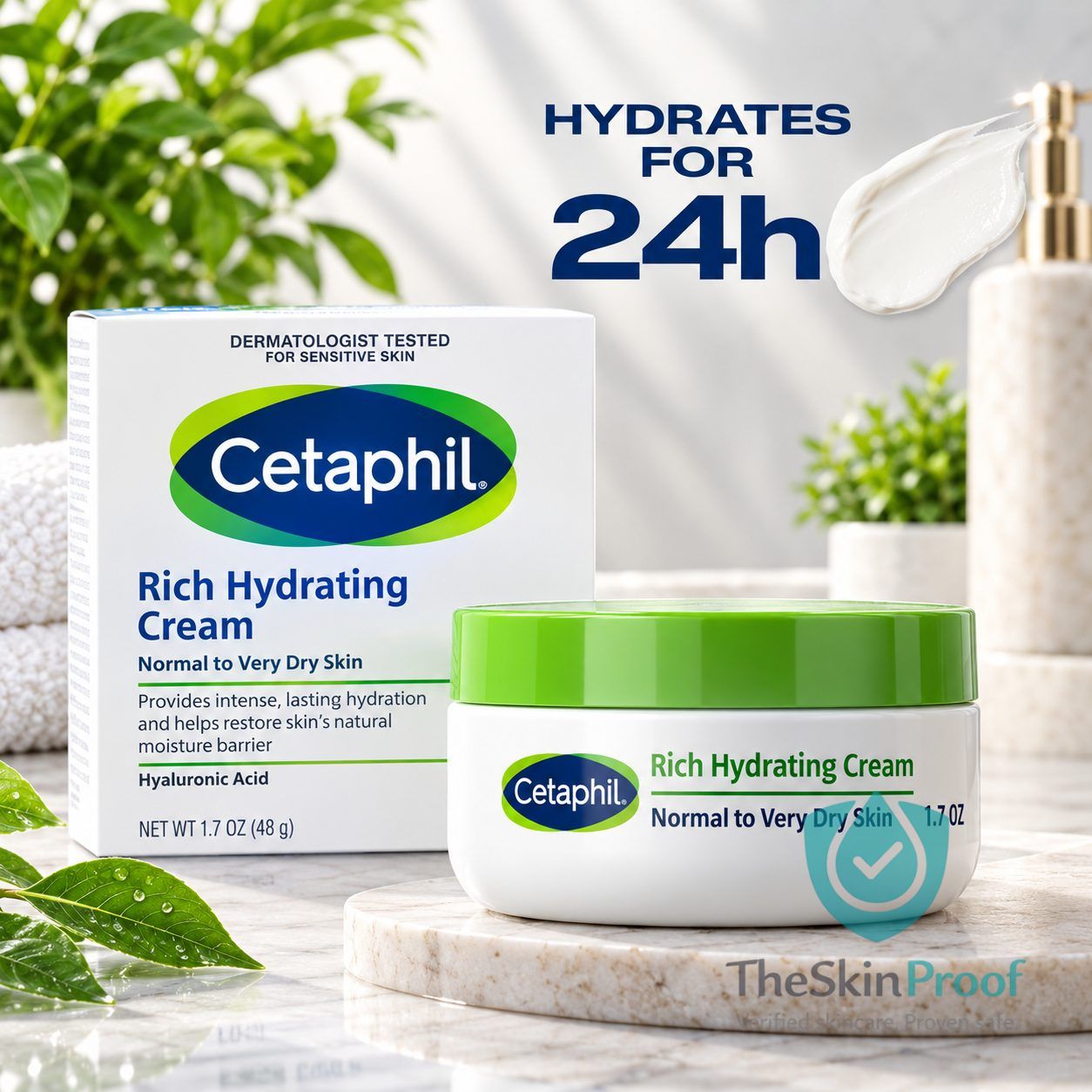 ✓ Verified • 2× money-backCetaphil Rich Hydrating CreamFrom ৳2,649Buy →
The short answer
A face oil does not add water to your skin. It only lays down a thin film that keeps water in. So in winter, use an oil at night, as the very last step, 2 to 3 drops on top of your moisturiser, or mixed with your cream in your palm. It helps dry skin; on acne-prone skin, many oils can block pores and make breakouts worse. To be honest with you, we do not have a dedicated face oil on our shelf right now. Instead, for dry skin a rich cream such as Cetaphil Rich Hydrating Cream or Cerave Moisturising Cream For Dry to Very Dry Skin does the same job more safely. For acne-prone skin, a light Purito Seoul Oat-In Calming Gel Cream is enough. Patch test any new oil first.
Oil and water are not the same thing
When their face feels tight in winter, many people think, "My skin has dried out, let me put oil on it." But what dry skin actually loses is water. Oil does not give that water back. Oil just sits on top like a lid, so the water underneath does not evaporate into the air.
Think of a simple example. Pour oil on a dry sponge and the sponge does not soften. You need water first, then the lid. Skin works the same way. So before an oil, your skin needs something watery: the dampness left after washing your face, a humectant such as hyaluronic acid or glycerin, and a moisturiser. For example, The Ordinary Hyaluronic Acid 2% + B5 draws water into damp skin, a cream goes on top, and an oil comes last if you want one.
This is why people who sleep with only oil on their face wake up looking greasy, but the tight feeling is still there. A good cream contains water, humectants and oily ingredients all together. That is why most people do not need a separate face oil at all.
Who a face oil is for, and who it is not for
Who may benefit
- Very dry skin, where the cheeks turn rough and flaky in winter.
- People past 30 or 40, whose skin makes less oil on its own.
- People who sleep in a room with a heater and wake up with paper-dry skin.
- People who get dry patches beside the nose or at the corners of the mouth.
Who should be careful
- Acne-prone or oily skin. Many people still have an oily T-zone in winter. Heavy oils here can block pores and increase whiteheads, blackheads and pimples.
- People who get fungal acne (small, uniform bumps on the forehead that itch). Some oils make this worse.
- Sensitive skin. Oils with added fragrance or essential oils can cause redness and stinging.
Which oils can block pores
Many people look up "pore-clogging" lists online. They give a rough idea, not a hard rule. The same oil can be fine on one face and cause breakouts on another. Still, in general:
- Higher risk: coconut oil, cocoa butter, wheat germ oil, flaxseed oil. Coconut oil in particular is good for body and hair, but causes trouble on many acne-prone faces. Read more in coconut oil on face, body and hair.
- Mustard oil: pungent, and causes stinging and redness on many faces. Best kept off the face.
- Relatively light: squalane, jojoba, sunflower oil, rosehip. These are usually less heavy, but still not on your face without a patch test.
- Essential oils (tea tree, lemon, lavender) never go directly on the face. They are concentrated and can irritate.
Remember one thing: a cleansing oil and a face oil are different. Skin1004 Madagascar Centella Light Cleansing Oil or Celimax Derma Nature Fresh Blackhead Jojoba Cleansing Oil are made to melt makeup and sunscreen and then be rinsed off with water. They are not meant to stay on your face overnight. To see which suits whom, read which cleansing oil is good.
When and how to apply it: the night routine
- Wash your face with a gentle cleanser such as CeraVe Hydrating Facial Cleanser Normal to Dry. Lukewarm water, not hot.
- Pat dry gently, leaving your face slightly damp.
- Humectant serum, 2 to 3 drops on damp skin. This is optional but helps very dry skin.
- Moisturiser, about two pea-sized amounts over face and neck.
- Oil (if you use one): just 2 to 3 drops. Warm them between your palms and press them gently onto your face; do not rub. A little more on dry areas (cheeks, beside the nose), less or none on the T-zone.
Mixing it into your cream: if separate layers feel like a chore, mix 1 drop of oil with your cream in your palm and apply both at once. This makes the cream a little richer and leaves the face less greasy.
Why not in the morning: in the daytime, oil on the face attracts dust, sunscreen does not sit properly and makeup slides. In the morning use only a moisturiser and a sunscreen, such as Anua Heartleaf Silky Moisture Sun Cream SPF 50+ PA++.
How often: for very dry skin, every night. For normal or combination skin, 2 to 3 nights a week, only on the dry areas.
What to use when there is no dedicated face oil
We will not pretend to sell what we do not have. A dedicated face oil is not in our stock right now. But the problem people buy a face oil for is solved more safely by a rich cream:
- Very dry, rough skin: Cetaphil Rich Hydrating Cream or Cerave Moisturising Cream For Dry to Very Dry Skin, a little more generously at night.
- Just a few dry patches (beside the nose, mouth corners, near the brows): a very thin layer of Bioderma Atoderm Intensive Baume at night. It is thick like a balm; there is no need to put it on the whole face.
- Acne-prone but tight in winter: a light gel-cream such as Purito Seoul Oat-In Calming Gel Cream or iUNIK Beta-Glucan Daily Moisture Cream. Better not to add oil.
One caution: some products have "squalane" or "oil" in the name but are really treatments, not plain face oils. For example, a squalane product with retinol in it is not something to spread on every night like an oil, and retinol is not for use during pregnancy or breastfeeding.
Patch test before a new oil goes on your face
- Put one drop of oil behind your ear or under your jaw.
- Apply it to the same spot for 3 to 5 nights in a row.
- Stop if you see redness, itching, small bumps or stinging.
- If nothing happens, start on the cheeks only, 2 nights a week.
Breakouts usually show up a few days later, so do not relax just because nothing happened on the first night. Read the full method in how to patch test.
Common mistakes
- Only oil on a dry face. Oil without water does not ease tightness. Damp skin and a moisturiser come first.
- Too much. More than 2 to 3 drops ends up on the pillow and blocks pores.
- Cream on top of oil. If oil goes on first, the cream does not sit properly. Oil always goes last.
- Oil in the morning with sunscreen on top. The sunscreen does not spread evenly and your sun protection may drop.
- Cooking oil or loose oil on the face. Open bottles collect dust and germs, and the smell changes.
- Carrying on despite breakouts. If pimples increase after starting a new oil, stop. This is not "purging".
- A "home formula" with lemon or essential oils. It raises the risk of irritation and of dark marks in the sun.
The Bangladesh reality
Putting oil on the face is nothing new here. Our grandmothers rubbed on mustard or coconut oil in winter and sat in the sun. On the body, hands and feet these work for many people. But facial skin is thinner, has more pores, and in Dhaka's dust and smoke a greasy face traps even more dirt.
In the north, in Panchagarh, Dinajpur and Rangpur, winter is colder and the air drier. There, people with very dry skin get good results from 1 drop of oil over a rich cream at night. In Dhaka and Chattogram winter is milder, and many people still have an oily T-zone. There, a good cream without any oil is enough.
On a winter trip to Sylhet, Sreemangal or Bandarban you get both cold wind and sun. Keep a small rich cream in your bag and use it at night after washing your face at the hotel. Do not forget sunscreen in the day.
To see the whole day's routine in one place, read the 24-hour winter skincare routine. For questions about night creams, see do you need a night cream in winter.
When to see a doctor
- Your face swells, burns badly or forms fluid-filled blisters after an oil or cream.
- Red, rough, itchy patches do not ease after 2 weeks of regular moisturiser.
- Pimples are painful, deep and leaving marks.
- Yellowish, dandruff-like flaking keeps coming back on the brows and beside the nose.
Why buy authentic
What stays on your face all night matters most to be genuine. Nobody knows what is mixed into a counterfeit cream. TheSkinProof is an invoice-verified skincare marketplace: the source of every product is checked against invoices. If a product is proven counterfeit you get 2× your money back; claims must be made within 7 days of delivery. We deliver across Bangladesh, and cash on delivery is available.
How to use each winter product, every question answered in one place: Winter FAQ Centre: products
What to use, how to use it, where to buy it
Step by step, by time of day. Every product is invoice-verified.
- 1
Morning, before going out
No oil in the morning, sunscreen instead
After moisturiser, two finger-lengths of sunscreen over face and neck. Do not put oil on your face in the day; it attracts dust and stops sunscreen sitting properly.
 Anua Heartleaf Silky Moisture Sun Cream SPF 50+ PA++৳2,199Buy
- 2
Evening, back home
Wash with a gentle cleanser
A small amount of cleanser with lukewarm water, 30 seconds of gentle massage. Pat dry and leave the face slightly damp.
 CeraVe Hydrating Facial Cleanser Normal to Dry৳1,399Buy
- 3
Night
A water-drawing serum on damp skin
2 to 3 drops on a damp face. It draws water into the skin, which oil cannot do. Not on a bone-dry face, where it can feel tighter.
 The Ordinary Hyaluronic Acid 2% + B5৳1,959Buy
- 4
Night
A rich cream instead of a face oil
About two pea-sized amounts over face and neck. If you use your own oil, only 2 to 3 drops on top of this, as the last step.
Cetaphil Rich Hydrating Cream৳2,649Buy - 5
Before bed
A thin balm on dry patches
A very thin layer beside the nose, at the mouth corners or near the brows. Not over the whole face, and never on breakout-prone areas.
 Bioderma Atoderm Intensive Baume৳1,799Buy
💡 Never oil alone on a dry face. Water first, then cream, oil last. If breakouts increase, stop straight away.
Frequently asked questions
Should I use face oil before or after moisturiser?
After. A face oil is the very last step. Wash your face, apply a serum or moisturiser while it is still damp, then warm 2 to 3 drops of oil between your palms and press them on. If the oil goes first, the cream does not sit properly. You can also mix 1 drop into your cream and apply both together.
Does face oil hydrate the skin?
No. Oil does not add water; it forms a film that slows water loss. Dry skin needs water first, from damp skin, a humectant such as hyaluronic acid, and a moisturiser. The oil then seals it in. That is why oil alone on a dry face leaves you greasy but still tight.
Can I use face oil if I have acne-prone skin?
Be careful, and often it is better not to. Heavy oils such as coconut oil and cocoa butter can block pores and increase breakouts. If your skin feels tight in winter, use a light gel-cream such as Purito Seoul Oat-In Calming Gel Cream or iUNIK Beta-Glucan Daily Moisture Cream instead, and patch test anything new.
Do you sell a face oil?
Not right now; a dedicated face oil is not in our stock. For dry skin the closest real fit is a rich cream such as Cetaphil Rich Hydrating Cream or CeraVe Moisturising Cream For Dry to Very Dry Skin, plus a thin layer of Bioderma Atoderm Intensive Baume on dry patches at night. Our cleansing oils are rinse-off products, not face oils.