Quick answer
Dry air, less sun and hot baths make psoriasis flare in winter. Take short lukewarm baths, then apply a thick fragrance-free cream such as Cetaphil Moisturizing Cream; don't pick scales or use pharmacy steroid mixes on your own, and let a dermatologist set your treatment.
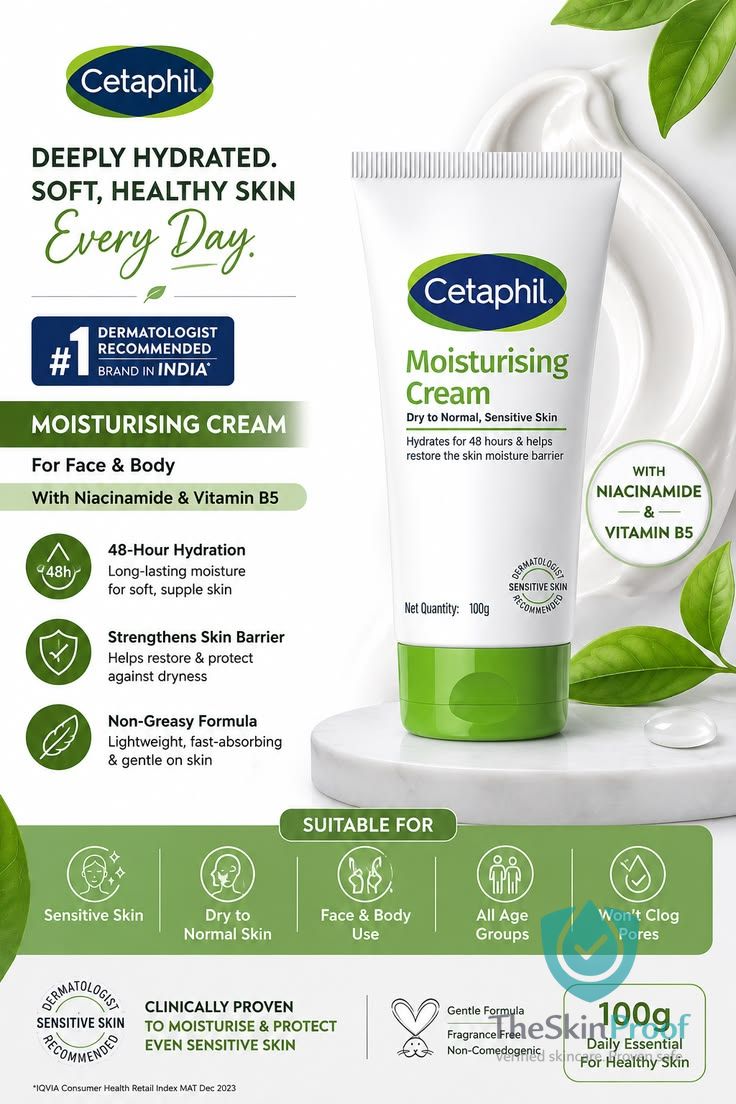 ✓ Verified • 2× money-backCetaphil Moisturizing Cream Dry to Very Dry, Sensitive SkinFrom ৳1,000Buy →
The short answer
Psoriasis tends to flare in winter for three main reasons: the air is dry, there is less sunlight, and we take long hot baths. No cream makes psoriasis go away for good; it is a long-term condition and a dermatologist should set your treatment. But the gentle care you do at home between doctor visits makes a real difference to itching, tightness and cracking. The routine is simple: a lukewarm bath of under 10 minutes, then within 3 minutes a thick fragrance-free cream such as Cetaphil Moisturizing Cream Dry to Very Dry, Sensitive Skin. For large areas of the body, CeraVe Moisturising Lotion for Dry to Very Dry Skin spreads easily. Don't pick scales, don't scrub, and don't buy a steroid "mix" from a pharmacy to use on your own.
To be honest with you: dedicated medicated psoriasis creams, urea creams and coal tar products are not on our shelf right now. Those are things to take on a doctor's advice. What we can offer is a daily gentle cleanser and a thick moisturiser that comfort the skin alongside the treatment your doctor gives.
Why psoriasis gets worse in winter
Dry air and the northern wind
From December to February, humidity drops. Water evaporates quickly from the top layer of skin. Psoriasis plaques are already dry and thick, so in winter they get tighter, crack and itch more. You feel it most on elbows, knees, the scalp and the lower back.
Less sun, more clothes
For many people mild sunlight brings some relief, which is why doctors sometimes prescribe controlled light therapy. In winter, fog and short days mean less sun, and the body stays covered in sweaters and shawls. But don't sit in the sun for long on your own; sunburn can trigger new plaques. Ask your doctor what to do about sunlight.
Hot water, wool and room heaters
Very hot baths strip the skin's natural oils. Wool sweaters rubbing directly on skin increase itching, and scratching can cause new plaques at that spot (this is called the Koebner response). Room heaters dry the indoor air even further.
Stress, sleep and winter colds
Coughs, colds and sore throats are more common in winter. In some people, psoriasis flares after a throat infection. Year-end work pressure, wedding invitations and late nights also play a part. You can't avoid all of these, but knowing about them helps you manage.
Gentle daily care between doctor visits
How to bathe
- Water should be lukewarm: comfortable on your wrist, never scalding.
- Finish in under 10 minutes. Bathing every day is fine as long as it's short.
- Instead of soap, use a gentle, fragrance-free cleanser such as Cetaphil Gentle Skin Cleanser Normal To Dry Skin, or if you prefer a bar, Cetaphil Gentle Cleansing Bar. Using it only where sweat collects (underarms, groin, feet) is enough.
- Don't rub with a towel; pat the water off gently. Leave the skin a little damp.
The 3 minutes after the bath
- Apply moisturiser on damp skin. On large areas (arms, legs, back) use CeraVe Moisturising Lotion for Dry to Very Dry Skin: about a teaspoon for one whole arm.
- On elbows, knees and thick plaques use a thick cream such as Cetaphil Moisturizing Cream Dry to Very Dry, Sensitive Skin, in a generous layer. Don't rub hard; smooth it on gently in the direction of hair growth.
- If your doctor has given you a medicine, ask them which goes first and which after, and how many minutes to wait. Don't change the order on your own.
During the day and at night
- Reapply a little cream to hands and feet after handwashing and after wudu. This matters most if you wash often.
- Before bed, another layer of thick cream on the plaques. A thin cotton long-sleeved top or socks on top keep the cream on overnight.
- For cracked lips use Vaseline Lip Therapy Cocoa Butter; psoriasis often brings dryness to the corners of the mouth too.
- Keep nails short so that scratching in your sleep doesn't tear the skin.
What to do about scales
The silvery white scales look bad, so many people pull them off with their nails. That causes bleeding, stinging and a higher risk of infection, and the plaque there gets thicker. After a bath, when scales are soft, apply moisturiser; they will lift off slowly on their own. For scalp scales, the shampoo or lotion your doctor prescribes is the right path; don't dig at them with a comb.
Mind and sleep
- Aim for 7–8 hours of sleep a night.
- 15–20 minutes of walking, prayer or breathing exercises a day help keep the mind calm.
- Smoking and alcohol can make psoriasis worse; try to cut down.
- Psoriasis is not contagious. Explain this to your family; for many people, the relief of not having to hide it lightens the mind too.
What NOT to do (common mistakes)
- Buying a steroid ointment or "mixture" from a pharmacy and using it yourself. Many shops mix several ointments and pack them into a small pot. These often contain strong steroids. Long-term use thins the skin and leaves marks, and stopping suddenly can bring psoriasis back harder than before. Steroids only under a doctor's supervision, where and for as long as they say.
- Starting or stopping tablets on your own. Don't take medicines on someone's advice or from an old prescription, and don't stop a current medicine without asking.
- Scrubs, loofahs and pumice stones. Rubbing plaques causes wounds and makes plaques spread.
- Heavily perfumed lotions and alcohol-based products. They increase stinging.
- Lemon, baking soda, kerosene or Dettol in bath water. These aren't home remedies; they damage skin.
- Long, very hot baths. Brief relief, more itching later.
- Believing "gone forever in a month" adverts. Psoriasis can be kept under control, but be wary of anyone promising a guaranteed permanent fix.
The Bangladesh reality
In Bangladesh there is a lot of shame and misunderstanding around psoriasis. Many people think it is contagious, or a sign of "bad blood". So instead of seeing a doctor, people buy ointments from the local shop or apply herbal oils. In winter, especially in villages and small towns, very hot baths, sitting in the sun after rubbing on mustard oil, and wrapping up in wool shawls are all common. Mustard oil irritates some people's skin; a fragrance-free cream is usually the safer choice.
Government medical college hospitals and district hospitals have dermatology departments where you can be seen at low cost. Once you have a diagnosis and a treatment plan, this home care makes that treatment work better. For a fuller winter routine, read the 24-hour winter skincare routine, and for short answers to other winter skin problems see Winter problems: questions and answers.
Why authentic products matter
Skin with psoriasis is already sensitive. A fake or expired cream with unknown fragrance or adulterants can increase stinging and itching. TheSkinProof is an invoice-verified skincare marketplace: the source invoice of every product is checked. If a product is proven counterfeit, you get 2× your money back when you claim within 7 days of delivery. We deliver across Bangladesh, and cash on delivery is available.
When to see a doctor
See a dermatologist without delay if any of these happen:
- Red, thick plaques with silvery scales have appeared for the first time and you have never been diagnosed.
- Plaques are spreading fast or cover a large part of the body.
- Small pus-filled bumps on the plaques, or the whole body turns red, with fever or chills. This can be an emergency; go to a hospital the same day.
- Pain, swelling or morning stiffness in joints (fingers, knees, ankles, lower back).
- Pitted nails, yellowing nails or nails lifting off.
- Cracks that bleed, ooze pus, feel hot or are getting more painful (signs of infection).
- Itching keeps you awake at night, or your mood is very low.
- No improvement after 4–6 weeks on your doctor's treatment, or you have side effects.
- You are pregnant or breastfeeding and have questions about continuing treatment.
Further reading
- Skincare for eczema
- Why your body itches in winter
- Hot baths in winter and your skin
- Do room heaters, blankets and wool harm your skin?
What to use, how to use it, where to buy it
Step by step, by time of day. Every product is invoice-verified.
- 1
Right after a bath
Gentle cleanser, lukewarm water
Bathe for under 10 minutes. A little cleanser only where sweat collects; never scrub plaques. Pat dry with a towel.
 Cetaphil Gentle Skin Cleanser Normal To Dry Skin৳999Buy
- 2
Right after a bath
Body lotion after bathing
Within 3 minutes of bathing, on damp skin. About a teaspoon per arm or leg, smoothed on gently.
 CeraVe Moisturising Lotion for Dry to Very Dry Skin৳1,649Buy
- 3
Right after a bath
Thick cream on plaques
A generous layer on elbows, knees and thick plaques. If you use a prescribed medicine, ask your doctor which goes first.
Cetaphil Moisturizing Cream Dry to Very Dry, Sensitive Skin৳1,000Buy - 4
During the day
After handwashing or wudu
A pea-sized amount of cream after every wash of hands and feet. This keeps cracking and tightness down.
Cetaphil Moisturizing Cream Dry to Very Dry, Sensitive Skin৳1,000Buy - 5
Before bed
Lips and plaques before bed
A thick layer of lip balm, and another layer of cream on plaques. Wear thin cotton on top, not wool.
 Vaseline Lip Therapy Cocoa Butter৳298Buy
💡 Cream is a companion to treatment, not a replacement. Keep taking what your doctor prescribed, and keep the gentle care going every day.
Frequently asked questions
Why does psoriasis get worse in winter?
Mainly because of dry air, less sunlight and long hot baths. Winter air pulls water out of the skin, so plaques tighten, crack and itch. Wool rubbing on skin, room heaters, colds and sore throats, and stress also trigger flares in many people. A dermatologist should set your actual treatment.
What moisturiser should I use for psoriasis in winter?
A thick, fragrance-free cream such as Cetaphil Moisturizing Cream Dry to Very Dry, Sensitive Skin. Apply a generous layer to damp skin within 3 minutes of bathing, and again at night. It is not a treatment; it eases dryness and itching alongside your doctor's medicine. Medicated psoriasis creams are not on our shelf right now.
Is it safe to use a pharmacy-mixed ointment for psoriasis?
No. Shop-mixed ointments often contain strong steroids. Long-term use thins the skin and leaves marks, and stopping suddenly can make psoriasis rebound worse. Use steroids or any medicine only on a dermatologist's advice and exactly as they instruct.
When should someone with psoriasis see a doctor?
At the first appearance of plaques, if they spread fast, if joints hurt or swell, if nails pit or lift, if cracks ooze or get more painful, or if itching stops you sleeping. If the whole body turns red, or pus bumps appear with fever, go to a hospital the same day.